Portal
Robot skin and tactile AI research map
RoboSkin.ai maps robot skin, tactile AI, e-skin, tactile sensors, and humanoid robot skin for researchers, operators, builders, and readers tracking physical AI touch.
What is robot skin?
In practical robotics, robot skin helps robots detect contact, pressure, shear, slip, and interaction events across hands, grippers, arms, or curved body surfaces.
Portal
Robot skin and tactile AI research map
Guides
Plain-language explainers for tactile sensing concepts
Sources
Research notes with public references
Glossary
Definitions for robot skin and tactile AI terms

Tactile AI stack map
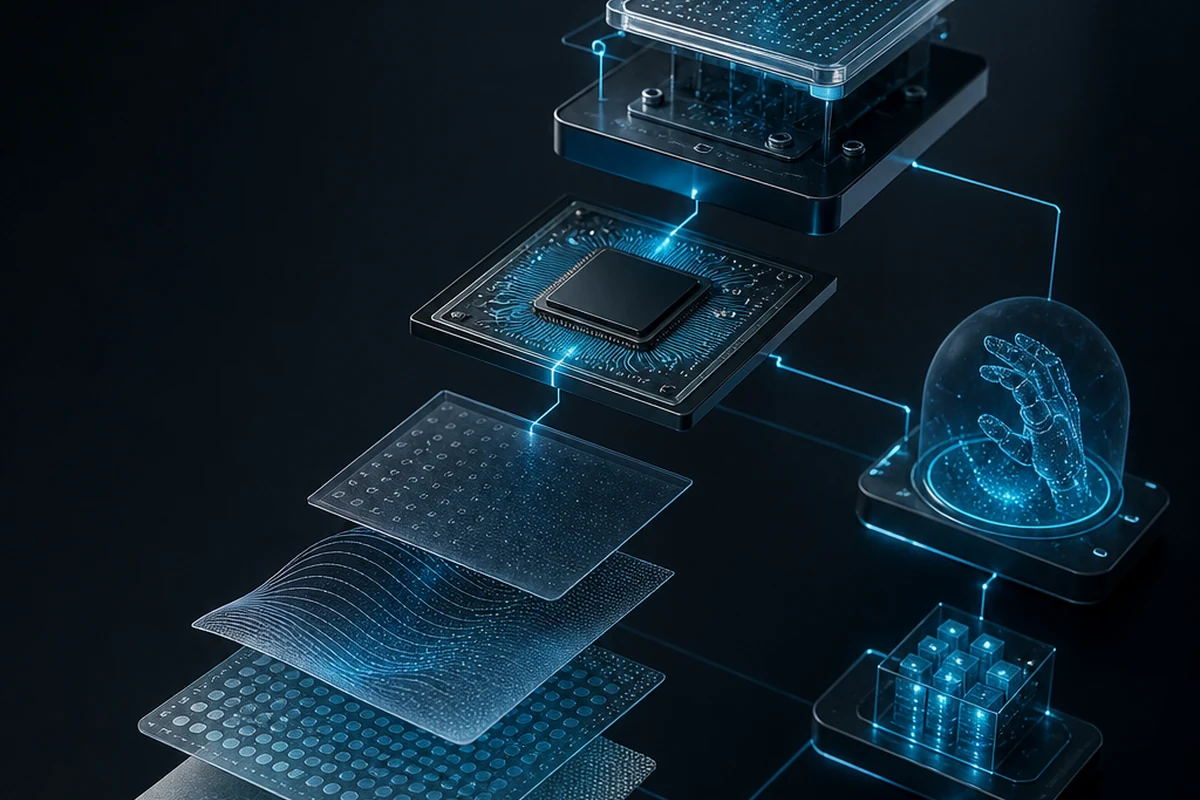
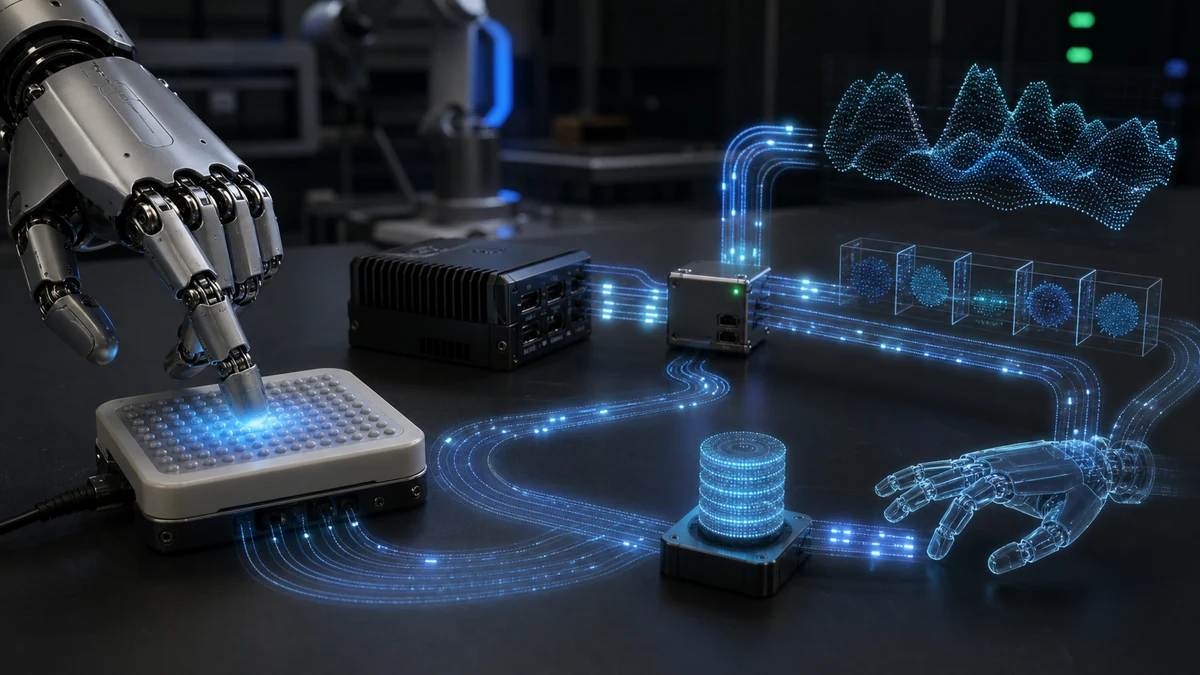
Robot skin is useful when contact signals move through a complete stack: surface design, sensors, signal conditioning, robot middleware, controller behavior, safety response, and evaluation data.
Flexible, soft, stretchable, or conformal surfaces that define where contact can be measured.
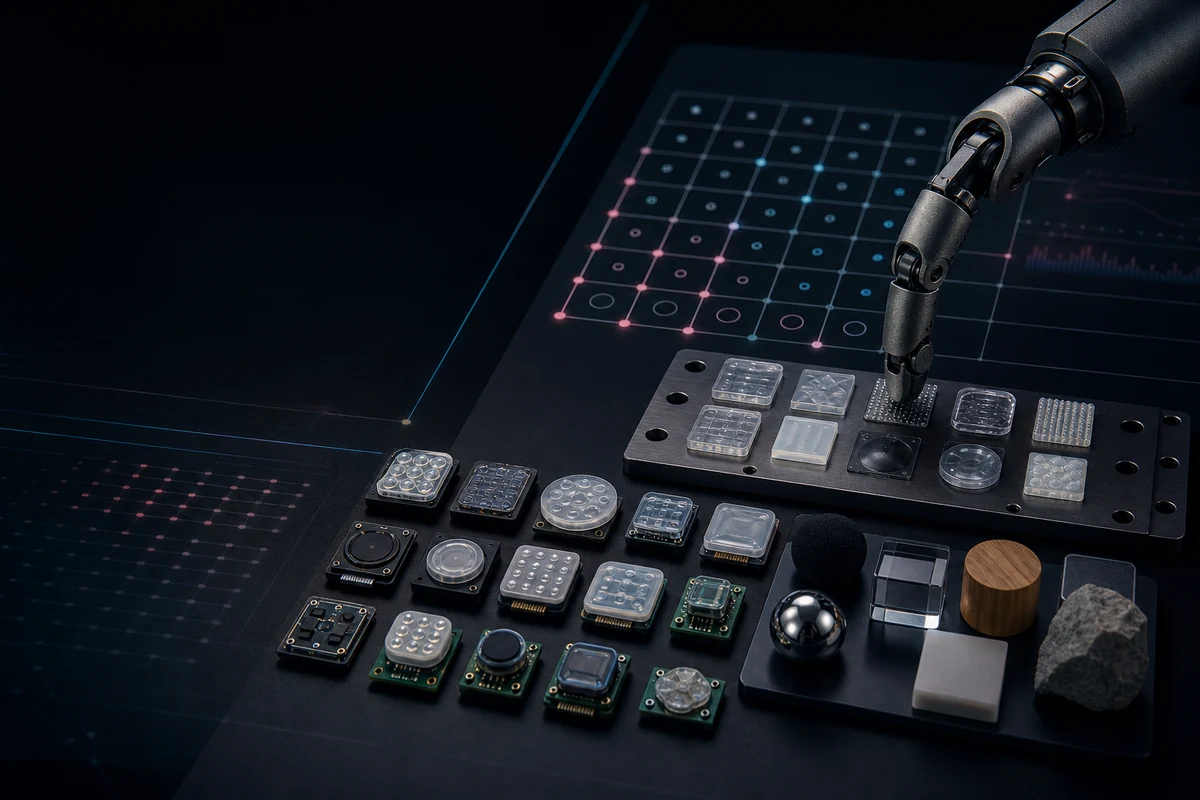
Capacitive, piezoresistive, optical, magnetic, liquid metal, or multimodal sensor arrays for robot touch.
Filtering, calibration, timestamping, and feature extraction that turn raw contact into usable streams.
Local models and embedded processing for slip events, contact classification, and lower-latency response.
Middleware, controllers, and policies that use touch for grasping, safety, manipulation, and evaluation.
Contact-aware responses that help physical AI systems behave more safely around people and objects.
Logs, datasets, benchmarks, and replay loops that make robot touch measurable and improvable over time.
Use this authority index to move from definitions to research, technology evaluation, references, resources, and inquiry paths.
Definitions and technical explainers for robot skin, tactile AI, e-skin, and tactile sensing terms.
Research notes and industry assets for teams following the tactile AI stack.
Routes for teams comparing tactile sensor modules, developer kits, or custom skin programs.
Contact paths for source corrections, research suggestions, and editorial collaboration.
Direct-answer coverage includes What is robot skin?, What is e-skin?, and How is tactile sensing different from vision or force-torque sensing?
Direct answer

Robot skin is a tactile sensing surface that helps robots detect contact, pressure, shear, slip, and interaction events across hands, grippers, arms, or curved body surfaces. It gives physical AI systems a contact layer that vision alone cannot provide.
Open the robot skin glossary ->Direct answer

Tactile AI is the sensing, data, and control workflow that turns touch signals into useful robot behavior. It can support grasp confidence, slip response, contact-aware motion, safety reflexes, and evaluation analytics for physical AI systems.
Browse tactile AI research ->Direct answer
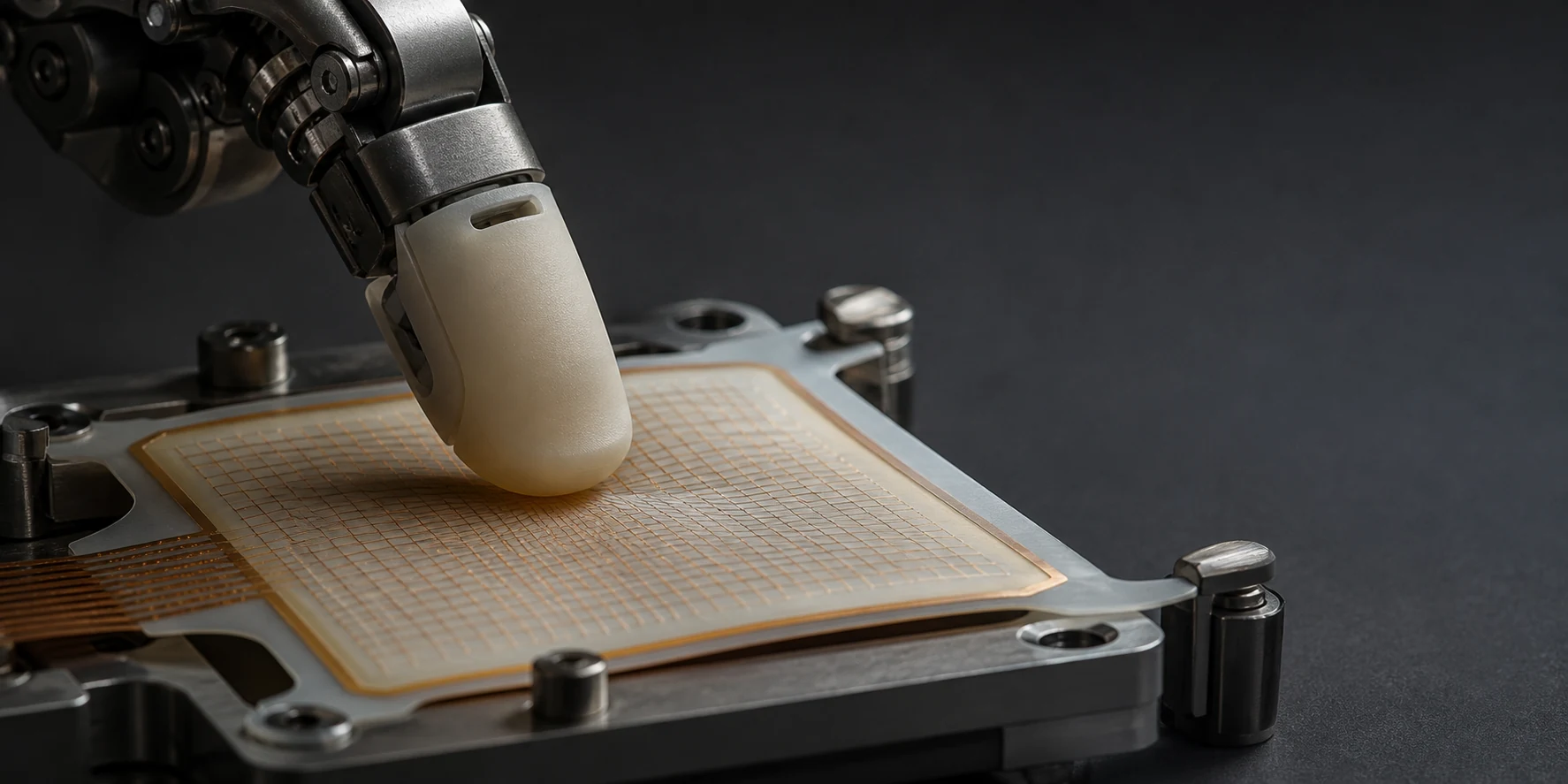
E-skin, or electronic skin, is a flexible or soft sensor layer designed to measure contact-related signals on non-flat surfaces. In robotics, e-skin can cover fingertips, palms, gripper pads, prosthetics, arms, or safety surfaces.
Read the e-skin brief ->Direct answer
Humanoid robot hands need touch because dexterous manipulation depends on contact timing, pressure, shear, slip, and object stability. Vision can guide a hand toward an object, but tactile sensing helps the robot understand what happens during contact.
View robot hand applications ->Direct answer
Vision observes a scene from outside contact, while tactile sensing measures what happens at the contact surface. Force-torque sensors can measure aggregate loads, but robot skin can expose distributed contact patterns across fingertips, grippers, or curved surfaces.
Explore tactile AI technology ->Research notes and resource entries organize the robot skin category around tactile sensors, e-skin architectures, stack maps, reader questions, and public reference paths.
Why tactile AI matters
Robots need contact data, not just vision, when tasks involve grasping, sliding, pressure, or safe physical interaction.
Read the application context ->
Graphene and liquid metal 3D force sensingA technical brief on normal force, shear force, slip, and texture sensing for robot fingertips.E-skin brief
Single-material soft robotic skinA current note on soft e-skin architectures using impedance and machine learning for multimodal touch.Pipeline brief
ROS 2 tactile pipeline contextA source-backed route for recording, replaying, transforming, and consuming tactile sensor streams.Resource path
Humanoid tactile stack mapA public route for mapping sensors, materials, middleware, edge AI, datasets, and evaluation triggers.Reference path
RoboSkin public referencesUse public research notes, glossary definitions, and educational references for evaluation context.Use these public resources to navigate category research, stack maps, references, and source-backed learning paths.

RoboSkin.ai industry asset
A public entry point for robot hands, e-skin, flexible sensors, tactile data, and physical AI applications.

RoboSkin.ai industry asset
A public learning map across sensors, materials, edge AI, datasets, grippers, prosthetics, simulation, and safety skins.

RoboSkin.ai industry asset
A concise explanation of why embodied AI needs touch for contact-rich physical environments.

RoboSkin.ai industry asset
A public reference direction for comparing tactile sensor concepts, benchmark methods, and robot skin evaluation paths.
The public site stays conservative while tracking signals that make robot skin, tactile AI, and distributed touch relevant to humanoid robotics.
Dexterous manipulation creates demand for tactile feedback beyond vision and force-torque sensing.
Grippers, cobots, and warehouse systems need better signals for slip, collision, proximity, and fragile handling.
Tactile datasets and benchmark protocols will matter as physical AI moves from perception to contact-rich work.
Materials, sensor arrays, and embedded processing are moving tactile sensing closer to deployable robot surfaces.
Start with the public research notes, suggest a source, or send a correction when a claim needs better support.
Send a research note ->Primary path
Best for readers who want source-backed context on robot skin, tactile AI, and e-skin.
Partner path
Use for research collaboration, source suggestions, or educational content ideas.
Correction path
Use for unsupported claims, outdated references, or better public sources.
Direct inquiries: contact@roboskin.ai