Source boundary
Public sources stay visible
Each note keeps source attribution separate from RoboSkin.ai interpretation.
A source-backed signal board for robot hand tactile sensor research, slip detection robot hand questions, robot skin, tactile AI, e-skin, multimodal sensing, ROS 2 tactile pipelines, and contact-aware robot hands.
Public notes use conservative language. Application-specific performance, durability, and integration claims still need source-backed, application-specific evidence.

Source boundary
Each note keeps source attribution separate from RoboSkin.ai interpretation.
Evaluation lens
Performance, durability, and integration language is framed as evidence to verify.
Category memory
Research briefs link back to glossary language, tactile AI routes, and application context.
Physical AI route
Use the Physical AI explainer to connect robot skin research, tactile sensing, and contact feedback without turning source notes into product claims.
Open Physical AI contact-feedback route ->Touch data route
Use the touch-data guide to connect tactile papers to contact events, timestamps, body frames, calibrated values, and robot actions.
Trace Physical AI touch data ->Research lane

2026-06-17 / 5 min read
A practical research note on DexSkin, conformable capacitive e-skin, high-coverage tactile sensing, calibration transfer, and contact-rich manipulation learning.
Research lane

2026-04-23 / 5 min read
A research-oriented explanation of why full-hand tactile coverage matters for adaptive grasping, occluded manipulation, and contact-aware robot hands.
Research lane
2026-06-18 / 5 min read
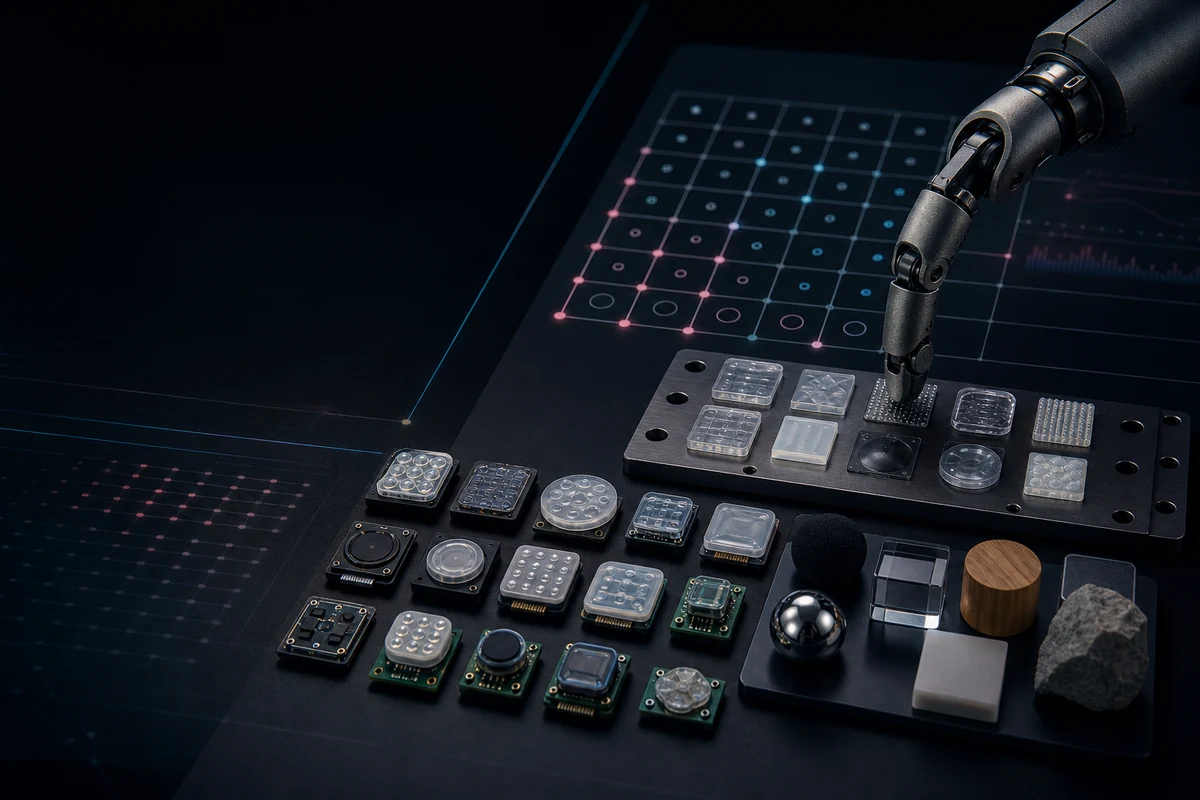
A source-backed research landscape note on Tactile Robotics outlook, sensor types, distributed tactile sensing, simulation, benchmarking, and data interpretation.
Research lane
2026-06-16 / 5 min read
A source-backed note on fluid-based soft robot skin, human-robot interaction, contact detection, temperature control, and why exterior feel matters.
Research lane
2026-06-18 / 5 min read
A source-backed brief on origami capacitive robotic e-skin, large-area coverage, super-resolution tactile localization, shear sensing, and proximity detection.
Research lane
2026-06-18 / 5 min read
A practical research note on open-source magnetic tactile calibration, three-axis force sensing, in-situ calibration, and why low-cost sensors still need repeatable setup.
2026-06-18 / 5 min read
A source-backed note on eFlesh, cut-cell microstructures, 3D-printable magnetic tactile sensors, low-cost fabrication, and robot gripper deployment tradeoffs.
Research lane
2026-04-18 / 5 min read
A deployment-focused article on large-area tactile arrays, curved-surface coverage, adjustable resolution, slip detection, and manufacturing tradeoffs.
Research lane
2026-06-18 / 5 min read
A research note on optical/electronic artificial skin, CNT haptic layers, near-infrared molecular sensing, force-temperature sensing, and robotic perception beyond touch.
Research lane
2026-04-22 / 5 min read
A practical brief on temperature and pressure bimodal tactile sensing, signal decoupling, and why crosstalk matters for robot skin.
Research lane

2026-06-18 / 5 min read
A technical brief on bioinspired spiking architecture, large-area soft e-skin, low-power tactile localization, and neuromorphic touch processing.
Research lane

2026-04-19 / 5 min read
A robotics software guide to ROS 2 Kilted, tactile data messages, rosbag workflows, force-torque context, and replayable sensor evaluation.
Research lane
2026-06-18 / 5 min read
A source-backed note on AI-integrated bionic fingertip e-skin, wet slippage detection, fingerprint microtextures, and why dry-surface slip claims are not enough.
2026-06-18 / 5 min read
A source-backed note on slip-actuated bionic tactile sensing, dynamic DC generator E-textile, robotic fingers, and real-time grasp monitoring.
Research lane

2026-04-24 / 5 min read
A practical review of single-material soft robotic skin, electrical impedance tomography, and why whole-surface sensing changes robot skin design.
2026-04-20 / 5 min read
A conservative guide to self-healing e-skin claims, multimodal sensing, damage recovery, and what must be validated before deployment language is credible.
Research lane
2026-06-18 / 5 min read
A source-backed note on Sparsh-X, Digit 360 multisensory touch, self-supervised tactile representation learning, and why robot skin data should not be reduced to images.
2026-06-18 / 5 min read
A technical note on MiTaS, heterogeneous tactile sensors, GelSight and event-based touch fusion, and why tactile frequency matters for contact-rich imitation learning.
2026-06-18 / 5 min read
A source-backed brief on Dream-Tac, tactile world-action modeling, predictive contact dynamics, and why robot skin data needs future-state reasoning.
2026-06-18 / 5 min read
A source-backed brief on GenForce, cross-sensor tactile representation, force prediction transfer, and why calibration reuse matters for robot skin deployment.
2026-04-21 / 5 min read
A source-backed note on event-based and neuromorphic tactile sensing, sparse contact events, and why low-latency touch matters for robot control.
Research lane
2026-06-18 / 5 min read
A source-backed brief on FreeTacMan, robot-free visuo-tactile data collection, human demonstrations, tactile datasets, and scaling contact-rich manipulation data.
2026-06-18 / 5 min read
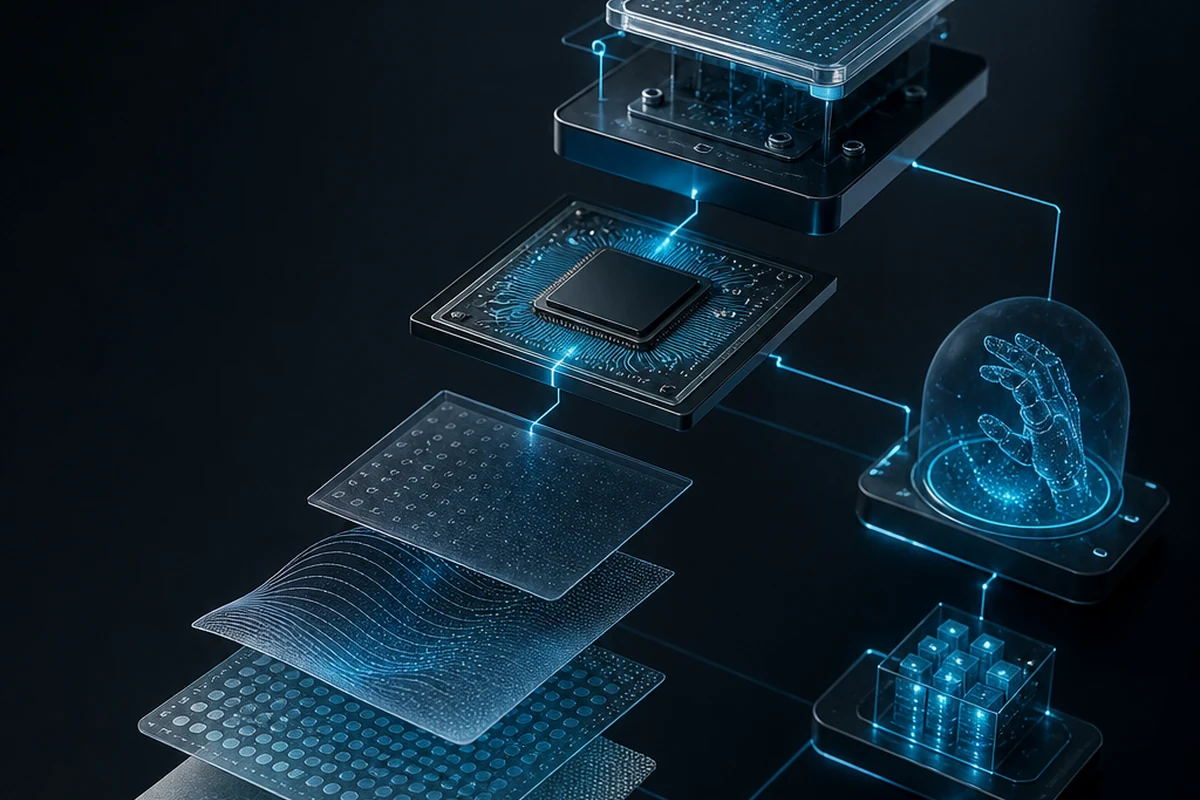
A research note on humanoid visual-tactile-action datasets, contact-rich manipulation, multimodal robot data, and why humanoid tactile learning needs synchronized action context.
Research lane

2026-04-25 / 5 min read
A source-backed technical brief on miniaturized tactile sensors that separate normal force, shear force, slip, and texture signals for dexterous robot hands.
Research reading path
Move from source papers to glossary definitions, then compare what each brief says about sensing surface, data quality, and robot control.